8 Discussion
In the introduction I mentioned a myriad of questions that this thesis poses 1.3. I have already discussed some of the more particular answers to some of those,
- Section 2.4 looks at how heterogeneous networking enables the networking of high- and low-level machine control components and Section 3.5 shows how that can be combined with software representations of controllers that can be rapidly reconfigured. Together, those chapters answer the question of systems architecture.
- Using networks and networked software components rather than file formats (like GCode) enables us to build machine workflows across planning and control steps.
- Describing workflows that combine variable control configuration steps alongside machine tasking can be managed by combining dataflow representations with scripting capability. This allows us to easily switch between machine configurations as testing devices (to build preliminary models) and as output devices (to make parts).
- I showed that the systems can be re-configured (rather than re-built) to develop both 3D printing and CNC machining controllers (6.4, 7.5.1), as well as a collection of pen plotters 3.4.5 and various other machine projects.
- Section 6.3 develops a mostly-complete feedback-based digital fabrication workflow. It is missing the trajectory generation step, but develops processes for both high- and low-level planning using models alongside explicit optimization. This has the result of greatly reducing parameter spaces that must be tuned by-hand 6.11.1. The workflow also enables some resilience to human errors 6.11.5.
- Models for machine physics that are simple enough to be fit easily from data, but complete enough to capture important machine physics,
- Section 5.4 describes a motor controller that can fit (5.5.1) its own models.
- Section 5.5.2 shows how kinematic models (5.3.2) can be fit from machine data.
- In Chapter 6, I show how models for polymer melt flow (6.5) and print cooling (6.7) can be developed that combine machine and material physics together using computational metrology.
- In all modelling examples in this thesis, I use the machines where the models will be used to build those models. This is enabled by the systems architecture as I mentioned in the first point here, and greatly simplifies the deployment of model-based control because models are automatically aligned to hardware. Other model-based approaches require an “offline loop” where models developed using i.e. SI-unit specifications must be carefully calibrated for use across many different pieces of hardware, each of which has its own small variabilities (for example, see 5.8.2).
- I showed how machine control (a constrained optimization problem) can be reframed from the state-of-the-art’s approach (where we have a set of tools that let us manually solve the optimization using tacit knowledge), into explicit constrained optimization based solvers. Section 5.6 shows how velocity planning solvers (where state of the art solutions are already explicit formulations) can be improved using high fidelity motor and kinematic models (rather than heuristics-based approximations of those).
- This enables our planners to utilize more of our motion systems’ underlying dynamic range, which enables faster overall processing rates 5.7.1, which shows promise to noticeably improve the productivity of CNC machines 5.8.1. In 3D printing, the optimization-based workflow helps us to more fluidly move around in process parameter space which, when coupled with high-level optimizations, leads to decreased printing time when compared to the state-of-the-art workflow, especially when we print larger parts (Section 6.10.3).
- I expressed some concern that model/optimization-based approaches could turn
- In Section 6.11.1, I show how workflows that use explicit optimization steps need not become back boxes, by developing techniques that let us mix heuristics with models (6.8.1.2). In 7.4.1 I showed how virtual machines can be used as a tool for CNC operators to virtually compare toolpaths’ velocity deviations (~ deviations from their target chip loads), and to estimate cutting forces from machine data 7.4.2. To demonstrate their use, I use these tools in combination with my own tacit knowledge to iteratively develop a machining toolpath in Section 7.5.3.
- In fact the outputs from our optimizers can be quite informative: we are after all producing lots of process data every time we use these machines. In Section 6.11.3 I show how process models can teach us about materials, and Section 6.11.2 shows how optimizer- (and machine-) sourced datasets can be used to learn about hour hardware limits, and how they interact with process geometry and parameters.
- The last point above segues well into the final question that I posed in the introduction, which asks how we might use models for machine design. Besides 6.11.2 (mentioned above) as a machine designer’s feedback tool, I demonstrate how models might be applied by machine designers in their selection of motors and motion parameters (for heuristically tuned veolocity planners) in Section 7.5.2.
8.1 Computational Metrology
A key theme in the thesis is the idea of computational metrology. (2025) I have mentioned this in passing on a number of occasions, but should make it (and its value to us) explicit.
- CM replaces models as parameters with models that are predictive and “computable”: rather than models, we have simulations that can reproduce model outputs virtually.
- The concept reflects the actual value of models, which is in their being predictive.
- The models used in this thesis are of this type: they predict performance of integrated systems and combine multiple components (hardware, controllers).
8.2 Models as Interfaces for Systems Integration
Overall, the results in this thesis show what is possible when we are powered by systems integration tools, the development of which has a long history at the CBA. In this thesis I expand the capabilities and use of these tools, and combine them with machine models that let us (machine operators and designers) use, develop, and inspect machine tools with respect to their real physical constraints. Doing so is only possible when we can make connections between the real hardware that runs our machines, the programs that power them, and the choices that we make when doing so.
Besides all of the computational systems architecture developed to literally integrate these systems, the thesis also shows how models can be used as a core representation or interface between hardware and software. Models can be inspected by users (a workflow feedback tool), used in high planning steps (a predictive tool), in design steps, or used directly in controllers. Each of these aspects of the digital fabrication world are different aspects of one larger constrained optimization problem which has many degrees of freedom: it is a globally distributed, asynchronous design problem that we are all working on together, not unlike the computing industry as described by (Baldwin and Clark 2000). The problem’s constraints are real and physical, and computational models can make descriptions of those constraints portable.
Adoption of models as a core interface for digital fabrication could have effects in the digital fabrication industry like:
- Helping vendors of machines, nozzles, cutting tools and materials articulate clearly the performance of their components to customers: helping customers to make better decisions and maybe increasing machine firms’ actual performance rather than their ability to spend marketing dollars.
- Allow control algorithms developers to virtually test their routines on a myraid of machines, in similar manner to the way software developers deploy and test their code-bases across operating systems.
8.3 Future Work
Each chapter contains notes on future work that is related to that topic,
8.3.1 Open Ecosystem for Machine Control
There is much active work in the domain of adding instrumentation to CNC equipment (2024) (2020). This work presents hardware integration challenges (as in, actually getting things bolted together), but also presents control integration challenges. This is the same core issue that I discussed with respect to other literature in 5.2.4: researchers cannot readily combine their contributions with their machine’s existing controllers. In particular, the velocity planners present issues to these researchers because they cause their test path velocities to deviate in ways that are difficult to predict. This means that time-series data are difficult to reconcile with the toolpath geometry, which makes all subsequent modelling steps more challenging. It also prevents them from easily integrating new online control strategies.
This is true in other domains where machines need to be “hacked” 1.2.4 and in mechatronics integration in general 2.1.1.
The clear next step for the work in this thesis is to continue developing the controllers into an ecosystem that other researchers, machine builders and users can easily integrate into.
- I originally developed OSAP, and then PIPES with this outcome in mind: the results for improvements to machine control were secondary. i.e. the tools in 3.2.3 and 3.2.4 in particular could be valueable in this regard.
- The same principles have driven the runaway success of open source software efforts as explored in (Eghbal 2020) and (Benkler 2002), who note that the modular ecosystems that enable distributed collaboration on open source software are themselves modular, performant and extensible. I.e. the systems that we use to compose systems are themselves composable.
- I wrote about this topic at length in (Read 2023) and tried to make some contributions towards it with (2024a) and (2024b)
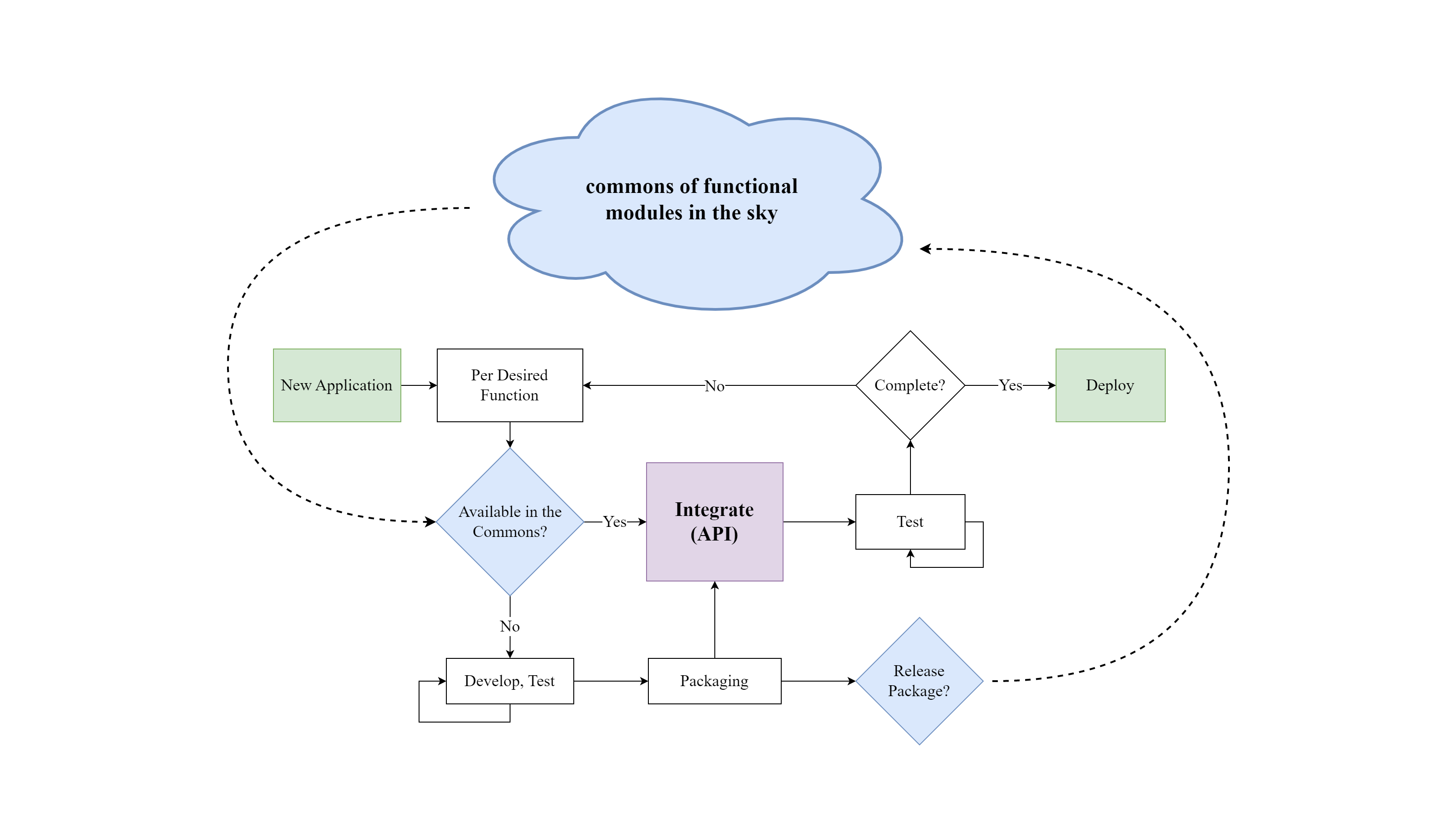
- This topic poses a few questions on its own, which are difficult to answer now but may become clear over the next decade or so:
- If machines are open, realtime networks, how no tower of babel ? Does end-to-end principle still apply?
- How do standards emerge or form in the open source, how do we enable that?
- Do we need open source or do we really just want interoperability, and how do we motivate profit-seeking firms to participate?
8.4 A Note on AI
(draft) For a thesis written in god’s year 2026, there is scant mention of AI and Reinforcement Learning (it’s control counterpart) in this thesis. There are a few reasons for this.
- black boxes are … black boxes,
- using smaller physics based models helps us to understand what we’ve done,
- this is especially useful for heterogeneous machines and processes, where we may have to retrain RL controllers for any new endmill, any new material, and certainly on new machines (or nozzles, states of disrepair, etc)
- purely “AI” driven control does well at high levels (10-100Hz) but not at low levels, partially due to processing power available there, partially due to reliability: most i.e. humanoid or dog robots operate with RL at these levels but use classic PIDs beneath them,
- for machine builders, it is the lower levels that provide the most frustration,
- machines also have much higher bandwidth requirements than this,
- a robot-dog’s foot can miss its target by centimeters, no problem: machine controllers care about every micron…
- we need these lower level controllers before we can get to RL (!), work that is typically still done by experts,
- i.e. step one is to make a simulation of your system (a-la the “digital twin” for the FDM and CNC in this thesis), such that they can be virtually operated in infinite-fun-time GPU space for hundreds of thousands of virtual-hours, in order to train RL…
- motors and sensors (etc) must all be plumbed to provide data and receive instructions, in much the same way as this thesis provides some frameworks for…
- so at once this is… kind of a counterpoint (that look, small models and deterministic(ish) controllers that can be interrogated can work very well and are already ahead of the SOTA), and also a precursor: an offering of framework and strategy with-which to make the computational representations required before we can even start doing RL on “these types of systems”